Fusion startup Xcimer hopes to pick site by year’s end
Fusion startup Xcimer Energy plans to pick a site by year’s end to host what would be the world’s largest laser.

Fusion startup Xcimer Energy plans to pick a site by year’s end to host what would be the world’s largest laser.

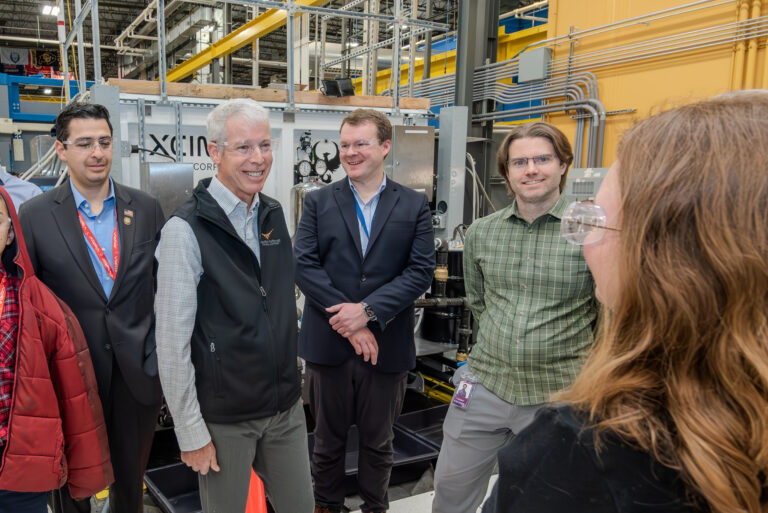
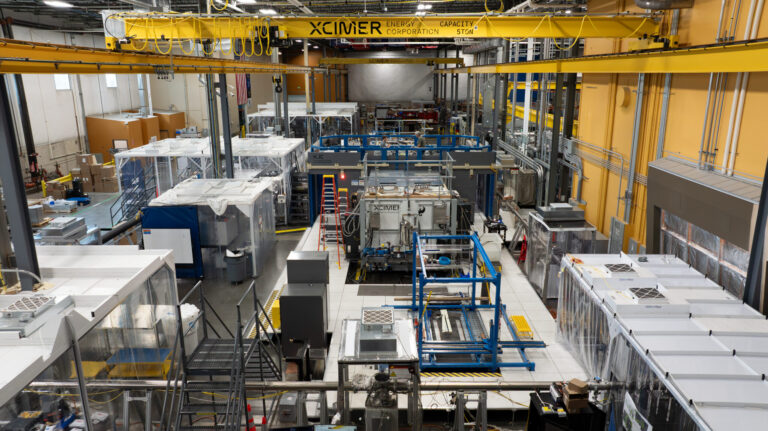
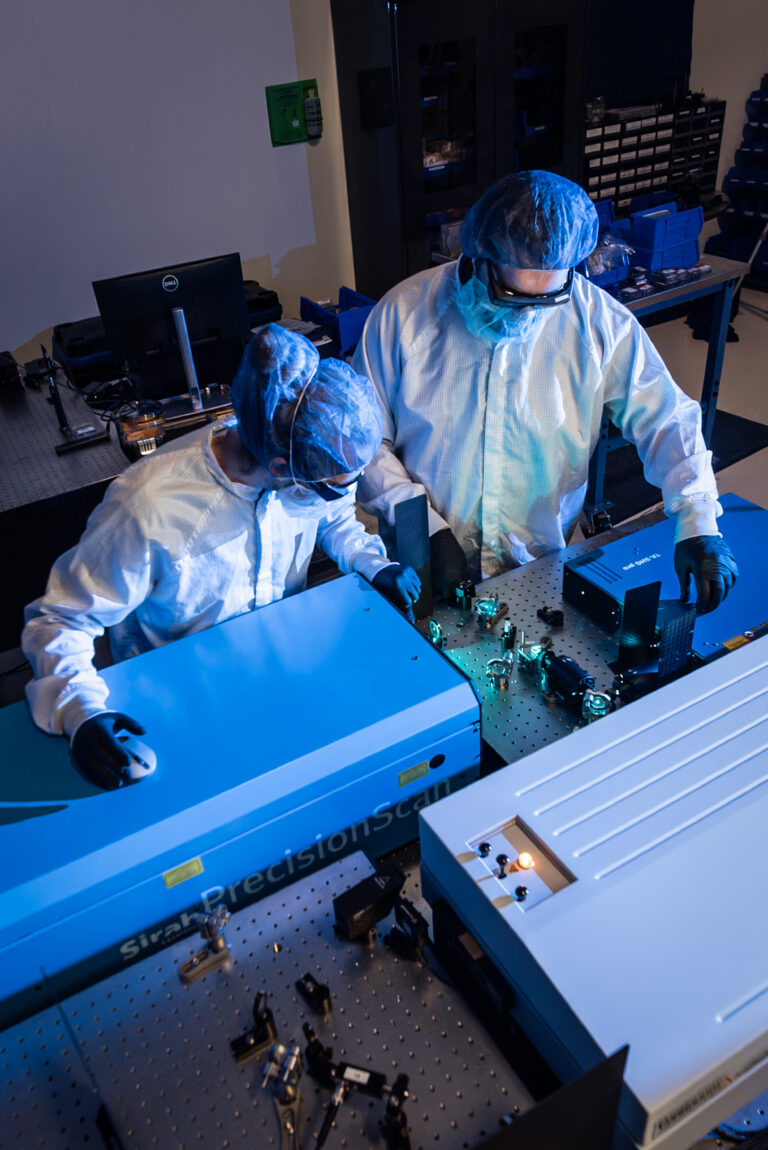
High-level visit, also including Chancellor of Colorado State University System Dr. Tony Frank, comes after Xcimer begins testing of one of the highest-energy KrF lasers in the world Xcimer’s prototype laser system, code-named “Phoenix,” will be complete in 2026; project is on-schedule and on-budget The leading laser fusion company has also advanced its multistate site search to house Vulcan – a high-yield laser fusion facility expected to demonstrate engineering breakeven in 2031 DENVER, Colo. (Dec. 23, 2025) – Xcimer Energy Inc. welcomed U.S. Energy Sec. Chris Wright and U.S. Rep. Gabe Evans of Colorado to the company’s Denver laser bay on Monday for a technology briefing and update on its progress to commercialize laser fusion. Earlier this year, Xcimer completed the first key component of its prototype laser system. Just last week, the company began testing the highest-energy KrF laser built in the 21st century. This laser provides the optical energy to power the “Phoenix” pulse compression prototype, which generates laser pulses with the optical characteristics needed to ignite inertial fusion fuel capsules. Xcimer’s Phoenix system will be fully complete in H1 2026, Xcimer Energy Co-founder and CEO Conner Galloway said. Phoenix is on-schedule and on-budget, Galloway said in the briefing, also attended by Chancellor of Colorado State University System Dr. Tony Frank. Xcimer’s goal for 2030 is to complete the construction of Vulcan, its next-generation facility, which will achieve the highest laser energy in the world, up to 12 MJ, using the largest laser amplifiers ever built. In 2031 Vulcan is expected to achieve engineering breakeven from fusion for the first time. Xcimer’s laser will be the world’s brightest, highest-energy and most powerful laser system, surpassing the French Laser Megajoule and China’s new facility in Mianyang. “Fusion on our energy grid will unleash America’s full potential and help

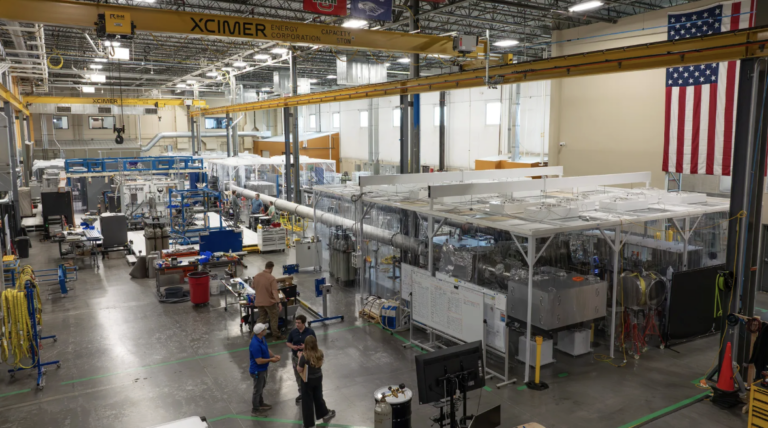
TUCSON, Ariz. (Dec. 4, 2025) – Xcimer Energy Inc. is expanding its U.S. manufacturing operations in a Tucson industrial facility, where the leading laser fusion energy company will scale up production of components for its high-energy lasers, including high-performance energy storage capacitors. The decision to expand in Tucson reflects the region’s longstanding capacitor industry and the technical expertise of the local workforce. Home of the University of Arizona, Tucson has long been a center of specialty capacitor design and fabrication, offering Xcimer proximity to experienced suppliers, engineers, and technicians. Xcimer’s capacitor engineering and design team collectively brings decades of experience in the exact class of high-energy capacitors required for the world’s largest laser systems. Concentrating that expertise in a dedicated manufacturing environment will accelerate product development, improve quality control, and reduce program risk as the company prepares to complete it’s prototype Phoenix laser system in early 2026, and scales up to start construction of laser modules for Vulcan, the world’s largest and highest-energy laser which will achieve wall-plug breakeven from fusion for the first time. “This facility gives us the space, the talent, and the manufacturing focus we need at exactly the right time,” said Xcimer Chief Operating Officer Brent Gill. “Tucson helps us strengthen our supply chain and position our team for the rapid scale-up required to deliver affordable fusion energy.” Initial build-out of the space is underway, with capacitor manufacturing operations expected to begin in 2026. Most viable path to fusion energy on the grid Fusion energy occurs when light atoms fuse into heavy atoms, releasing energy in the process. The same process powers the sun to deliver massive amounts of energy with zero carbon emissions and no accident risk. Through this process a single gram of hydrogen isotopes yields the same energy as 11 metric tons